Save children from pain. Irma Vitovska about the charity performance, suffering of the sick and ways to help them
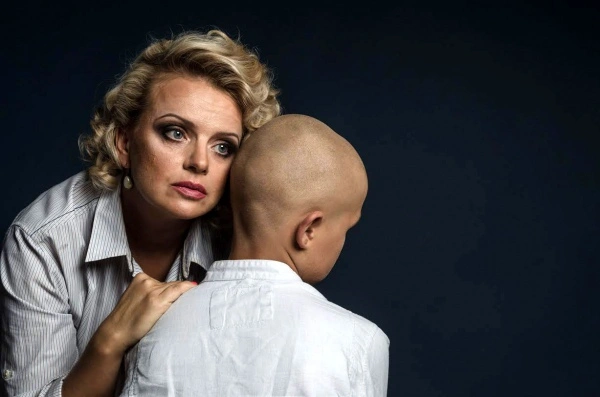
An extremely necessary project, designed to draw attention to the problems of children's palliative medicine in Ukraine, is implemented by a member of the Board of the League, actress Irma Vitovska with the support of the "Renaissance" MF and the Mother Teresa Foundation.
Iryna Slavinska
The charity performance "Oscar and the Pink Lady" based on the world-famous text by Eric-Emmanuel Schmitt will start in October. Its inspiration, motor and performer of the role of the Pink Lady is the actress of the "Young Theater", the star of the recent play "Stalkers", Irma Vitovska. "Oscar and the Pink Lady" is a project designed to draw attention to the problems of children's palliative medicine in Ukraine. In Kyiv, its premiere is scheduled for October 11.
This is what determined the topic of our conversation: we are talking about the new play, the animation in it, and the risks of playing with child actors... but also about the ethics of death, the life of terminally ill patients without pain, and the flaws of Ukrainian cruel superstitions regarding illness, life, and dying. An unusual point of view with a famous actress.
- Charity is quite fashionable in Ukraine now. There are a large number of points of application of force - and volunteering for the ATO, and displaced persons, sick children... Why is your attention and public advocacy directed specifically to palliative medicine? This is the field that does not provide for the recovery of the patient. Such a story is more difficult to "sell" to do-gooders, because there is no happy ending.
- This topic found me by itself. For a long time, I was engaged in charity work - mainly sick children. I once participated in a charity performance - we collected funds for three houses where "street children" live. At the same time, I realized that a performance can be a good mobilization tool: the audience goes to see their favorite actors, pays for a ticket, and at the same time does a good deed. Also, the performance can be an informational resource - through it you can talk about the problems with which philanthropists plan to fight.
In 2011, I got acquainted with the topic of palliative medicine through participation in the campaign for quality analgesia with tablet morphine "Stop Pain". It should not be confused with hospice. Terminally ill patients are in hospices. Palliative medicine, on the other hand, is concerned with ensuring a good quality of life for the terminally ill - quality analgesia is especially important here. In general, applicants for palliative care are all those who, due to a fatal disease, will not live as many years as the average life expectancy in this country would predict. In children, this process can be very long - after all, a child's body is different from an adult's. Many children need palliative care. For example, these are orphans with disabilities who live in closed boarding schools all their lives.
- If I understand correctly, the project of the performance will lead to the appearance of the first palliative institution for children in the Ivano-Frankivsk region? Why there?
- There is already such a center there - in Nadvirnaya. I am proud that my home region has become a pioneer in the field of palliative medicine. There are similar institutions in other areas as well - all specialists in this field know each other and communicate regularly. But the problem is different - in Ukraine, palliative care children do not have the appropriate status.
- What does it mean?
- That there are officially no terminally ill children in Ukraine. This leads to the fact that we cannot register new forms of pain relief for children - there are pain-relieving syrups and plasters with appropriate doses of morphine already calculated for children of different ages. Today, all such painkillers enter Ukraine unofficially - from good people.
- So how can the aforementioned center in Nadvirnaya, which you plan to develop, exist under such conditions?
- Palliative departments exist, but at hospitals, boarding schools and other specialized institutions where there are such special children. A child should have a normal quality of life in the last years of his life. Access to education, to entertainment, to a normal life. The child should be anesthetized and surrounded by people, not isolated. And if hospitalization is required, the hospital should be like a guest house where both mother and child can live comfortably. To make it another home, a second home. The children, who will soon leave, receive not only pain relief there. Psychological work with families must go on.
- This describes such ideal ethics and aesthetics. And what about this in Ukraine?
- In our society there are still wild remnants of bad attitude towards people with disabilities. Tact and ethics are absent in a large segment of the population. This is terrible. It seems that a big information campaign is needed. After starting work on the play, I encountered the fact that Ukrainians are very superstitious. For example, there were parents who, after a successful casting, forbade their child to play in the play "Oscar and the Pink Lady". Why? Because it was supposed to be the role of a child with cancer, and they superstitiously did not want to deal with it.
There are cases when sick children are exposed to loud exclamations of random passers-by, in the style: "God, how unfortunate!". All this stems from the fact that previously people with disabilities were "invisible", they sat at home, no one saw them. Now they are more present in the public space. The attitude towards death must change. We will all die - this is a fact that must be accepted. You should not be afraid to talk about it and not believe in superstitions about "attracting death".
- In addition, people with disabilities return from the war.
- Yes, war. Nothing happens with us until it hits our head. We worked with palliative children and adults even before the war. Let me remind you that as early as 2013, the law on analgesia with tablet morphine was signed, but our society does not know about it, and patients do not know how to protect their rights.
- How can this be influenced?
- For me, the main thing is to help overcome physical pain. If a person cannot be cured, then he should not suffer. If not to help, then to make it easier. Research shows that under the conditions of proper anesthesia and the appropriate quality of conditions, the life expectancy of such patients increases, and they live longer than doctors predicted. Having pain relief gives a person a choice. She can travel and get another higher education in time, and prepare all the necessary formalities before the end of her life.
- Why does pain relief not work in Ukraine, despite the adopted law?
- People don't know about it. Not all people are Internet-integrated, so the " Stop Pain " campaign explaining the right to pain relief passed them by. Young people are also not too concerned about it. There is also a problem with doctors. Tableted morphine is difficult to dose - you need to learn this, because morphine is a narcotic drug. On the other hand, where is the line between pain relief and the onset of a narcotic effect?
But it is especially difficult with children - sick children seem to be tortured. Children in Ukraine are still anesthetized with injections, because tableted morphine is not allowed for children, because it has too high a dose, and pain-relieving plasters and syrups are not imported. Children who leave are taken to the intensive care unit, where they lie alone, without their parents, tied to a table. They suffer not only physical, but also psychological pain. A child in such a condition should be among relatives, I think.
When it happens with a special patch, without pain and near mom, that's one story, it's another thing when you're in the intensive care unit and you're in pain. We must do everything so that the child does not suffer. I am not talking now about euthanasia... But think about why the terminally ill often commit suicide? Because they can't stand the pain, they can't live. An anesthetized person can live, close his affairs and face death with dignity. She should not scream and suffer. Here the problems are the same for both children and adults. But children are a priority, because they are generally outside the law. 70 thousand children need pain relief, but 17.5 thousand of them do not wait for this help.
Our performance "Oscar and the Pink Lady" should help raise awareness and attract the attention of the public sector. All money collected from ticket sales will be used to support palliative care centers. We want to purchase mobile palliative care vehicles that could make life easier for people at home.
- We have already mentioned the war in the conversation. How does this context affect the campaign? I have already heard from more than one volunteer that people are less and less willing to help, that money is running out.
- Our main resource in creating the play is not the contributions of individuals, but the resource of the "Renaissance" foundation and the Mother Teresa Foundation, which deals specifically with palliative children. I think that volunteers should sit on all the chairs. I helped the army a lot, and I think I have the right to divide my efforts into different projects. Imagine, both during war and during peace, somewhere a child suffers from pain. Even now, volunteers working with palliative children help the army, as do blood donation centers. We need to cooperate with each other.
- Let's talk about the performance as a mobilization tool. How does it work?
- I came up with this project two years ago. The play we decided to stage is "Oscar and the Pink Lady" by Erik-Emmanuel Schmitt . This is the only text about the last days of a child's life. I have not seen others like this, although I am looking. At first, the implementation of the project was postponed by the Maidan, then the war began. And we realized that we cannot delay any longer. The war can be long, we cannot deal with it alone. So you have to work four times more.
The worst is indifference. It is a greater enemy than war. In order to shake up society, a work of art is best provided. It gives complicity and empathy, allows you to emotionally experience what I mentioned above systematically. It is unusual that such a play is not created in Kyiv.
- "Oscar and the Pink Lady" is a play designed for a tour.
In addition to Ivano-Frankivsk and Kyiv, performances in Kharkiv, Lutsk, Odesa and Lviv, i.e. cities with their own palliative projects, are included in the budget. We are very much looking forward to invitations to other cities - we are ready for negotiations. For example, I really want to go to Dnipropetrovsk, because in the region, in Kryvyi Rih, there is also a palliative care center. While thinking about the project, I decided that it would be fair if Rostyslav Derzypilskyi, the director of the Ivano-Frankivsk Drama Theater, made this play. He is my teammate, and we understand the theater equally, so it is easy for us to work.
Our performance is an example of how decentralization works. I am convinced that such a project will be an incentive for regional theaters, who will realize that they can implement large projects together. Our project includes artists from Ivano-Frankivsk and Kyiv. In Kyiv, by the way, there are big problems with palliative care.
- Let's talk about the creative dimension of work.
- "Oscar and the Pink Lady" is a play about the life of children with cancer in the hospital. In the center of events is the boy Oscar, who is living his last days, and the Pink Lady, who helps him cope with this experience. We were not afraid and recruited a lot of child actors in the play. And some with him are so characteristic that they do not have a double in the second cast. We are taking a big risk here. The premiere will take place in Kyiv on October 11. With the support of Anetta Antonenko Publishing House and the translator Ivan Ryabchii, we were able to contact Eric-Emmanuel Schmitt, we are now coordinating the matter with the royalties, and we are also conducting negotiations regarding the writer's visit to Kyiv in November, when the play will be shown next.
- "Oscar and the Pink Lady" is a difficult text. It is often put on the theater stage. What angle of view of the material did you choose?
- Our performance will be very playful, visual, fast - like a music video. We want to make a show and tell a story. We do not want to make a "psychological theater", so there will be no great acting achievements here. In the production, we dance a lot, fly on beds... All choreographic numbers are made as metaphors - Olga Semyoshkina worked on this. Our scenography carries a lot of information as a certain symbol. The entire soundtrack of the performance is the music of "Elsa's Ocean". Slava Vakarchuk helped us a lot and allowed us to use all the music we would need. He also agreed to become one of the project's public advocates, so we will include his video message during the premiere.
"Oscar and the Pink Lady" will also have an important multimedia component - animation. Instead of decorations, there are moving screens on which you can broadcast the desired images as needed. The author of the animation is the famous artist Andriy Yermolenko, who has long dreamed of illustrating this very text. Nikita Titov and Oleksiy Berezyuk work together with him.
- What should happen to the audience after the performance?
- The same as after reading Schmitt's play or novel. Catharsis. The guys who work with us in Ivano-Frankivsk had not read this text before the production, and after the first reading they joked that there should be four "quick cars" on duty at the Operetta in Kyiv on the day of the premiere. We also really hope that the performance and the high-profile premiere will attract the attention of officials to palliative medicine.
The support of the mayor, the Minister of Health and the Ministry of Health and others is very much needed. They need to realize that there are children in Ukraine who die early, and they cannot be saved, but they can be helped.
- How do you feel in this situation?
- This is an ideal option for me. I want to do it. I will be honored if our play makes a turning point and the system changes. I will be happy to live knowing that we have become one of the cogs. That I contributed to something fundamental.
The author of all photos is Yuriy Bakay
http://life.pravda.com.ua/person/2015/08/31/199547/
Other News


