A comprehensive view of palliative care
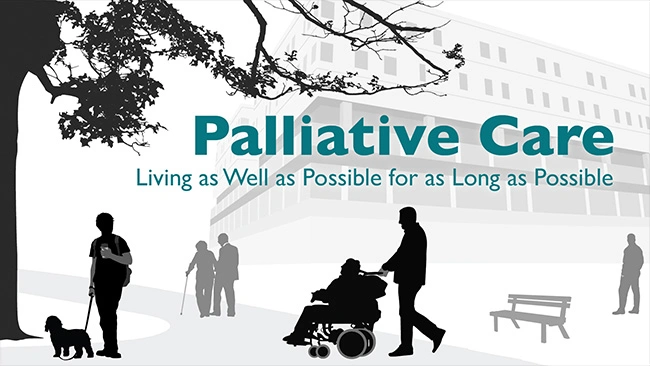
Palliative care in Ukraine is mostly perceived as pain relief for cancer patients in the last days of life. However, this concept is much deeper and more philosophical. Read about the multifaceted nature of the problem and the peculiarities of its solution in Ukraine and the world on the pages of "Your Health" in the material "Palliative care — the last debt of the state."
A part of a whole
Palliative care is a relatively new component of modern medicine, but recently it has been recognized as one of the integral components of the health care system. And the need for this type of medical care is constantly growing. According to WHO experts, 40 million people in the world need it every year in recent years, almost 80% of whom live in low- and middle-income countries.
Palliative medical care is necessary for many diseases. The majority who need it are adults with chronic cardiovascular disease (38.5%), cancer (34%), other chronic diseases (10.3%), AIDS (5.7%), and diabetes diabetes (4.6%). For example, palliative care is necessary for many stroke patients, some patients with kidney failure, chronic liver diseases, patients with multiple sclerosis, Parkinson's disease, rheumatoid arthritis, dementia, resistant tuberculosis, and patients with congenital defects. Therefore, the WHO has proposed a new revision of the definition of palliative care, which is an approach that makes it possible to improve the quality of life of patients (children and adults) and their families who are faced with problems related to a life-threatening disease, by preventing suffering and alleviating their account of early detection, thorough assessment and treatment of pain and other problems and symptoms (physical, psychosocial and spiritual). Taking into account the modern global concept of palliative hospice care, the search for optimal forms of its provision, ensuring quality and accessibility for the population is gaining particular relevance.
At the same time, most countries of the world have recognized and adhere to the basic principles of PCB, which:
- affirms life and recognizes dying and death as a natural process;
- does not intend to bring or delay the onset of death, but ensures the patient's highest possible quality of life;
- ensures the availability of care according to clinical indications (assessment of the probable prognosis of disease progression and life expectancy, severity of symptoms, including pain, self-care capacity and specific needs of an incurable patient), and not according to nosological forms of the disease, the location of the patient, his age, gender , economic status, etc.;
- provides for adequate and equal funding of palliative and hospice care facilities and services;
- ensures respect for the human dignity of the patient and his family members;
- enables any person who needs such assistance to receive it without delay and in full;
- provides for active medical and diagnostic measures only in the case of the patient's consent, in the absence of which treatment and medical interventions should be stopped immediately.
Tasks that PCB should provide:
- qualified selection of patients who need it, as well as determining the status of a palliative patient;
- provision of medical care (control of pain, elimination or reduction of vital activity disorders and other severe symptoms of the disease that impair the quality of life) with the use of adequate and effective drugs, including opioid analgesics, psychotropic drugs and other prescribed drugs, and according to the indications and auxiliary drugs means of treatment (therapeutic exercise and massage, aromatherapy, art therapy, guided visualization, relaxation, meditation, self-hypnosis, etc.);
- provision of psychological/psychotherapeutic assistance and support to palliative patients and their family members, medical and social workers, caregivers;
- organization of medical and social rehabilitation of palliative patients with the aim of maximal continuation of their labor activity and social activity;
- professional care in outpatient or inpatient settings, including at home, as well as hospice care;
- social care and legal protection of palliative patients at the end of their lives, as well as their family members;
- religious/spiritual support and guardianship;
- providing an opportunity for relatives of palliative patients to continue working and maintain social activity, psychosocial support and moral support both before and after the death of such patients.
Not only pain relief
Different aspects of palliative care needs were first summarized and presented in the World Atlas of Palliative Care at the End of Life (hereinafter referred to as the Atlas), published by WHO and the World Alliance for Palliative Care (WPA).
The Atlas provides the definition of palliative care proposed by WHO, but detailed from the perspective of a comprehensive approach.
First, it was indicated that patients with both chronic and life-threatening (or life-limiting) illnesses need such care, which is a wide range of illnesses. The need to start providing palliative care early, i.e. long before the onset of the terminal stage of the disease, is recognized as optimal.
Second, it states that there are no time or prognostic data limitations when providing palliative care. That is, such care should be provided based on the needs of the person, and not on the basis of the diagnosis or prognosis of the disease, which means expanding access to palliative care. After all, in the early stages of treatment (as required by the WHO), it is needed by at least the same number of patients as in the last year of life. Palliative care at an early stage has been proven to be the most effective, as it not only significantly improves the quality of life of patients, but also reduces the number of unnecessary hospitalizations and the frequency of use of medical services.
Thirdly, the Atlas provides evidence of the need for palliative care at different levels, that is, it is not limited to a specialized link, but covers both primary and secondary levels of health care.
In the world, palliative care is usually provided at three levels. The first level is the so-called palliative approach, which can be implemented by all doctors, provided that they have undergone special training and acquired appropriate qualifications.
The palliative approach is the application/integration of the principles and techniques of palliative care in institutions that do not specialize in providing such services. It should be used by general practitioners and employees of general medical facilities, as well as nursing care facilities and boarding houses. Therefore, it is necessary to include a palliative care course in the basic education programs of doctors, nurses and other specialists. According to the recommendations of the Council of Europe, all professionals working in the field of health care should be well aware of the basic principles of palliative care, as well as be able to apply them in practice.
The second level is basic palliative care, provided by primary care physicians and those who treat patients with life-threatening illnesses, who must have basic knowledge of palliative care.
And finally, the third level is specialized palliative care, which teams of specialists from various specialties provide to patients with complex problems. This function is performed by services whose main activity is the provision of palliative care. Their employees must have a high level of special training. In addition, to ensure the effective work of such teams, additional resources and more specialists are needed, because they will have to solve a wide range of problems of patients with progressive incurable diseases.
Specialized palliative care should be provided by specialists who have undergone specialization in palliative care in specialist institutions with a recognized reputation and have gained sufficient clinical experience for effective treatment of patients in this direction. Specialist care is an important component of palliative care, but a sustainable, high-quality and affordable palliative care system must be integrated into primary care, residential and home care, and support families and community volunteers who take care of these issues.
One does not interfere with the other
The need for palliative care at different levels depends not only on the mortality rates of the population due to diseases for which such care is necessary, but also on the model of organization of the health care system and the degree of integration of palliative care into it. In particular, in highly developed countries, the share of specialized PCB is 30-45%.
Another feature of the modern approach to providing palliative care is indicated in the Atlas: patients can receive it in an inpatient hospital, hospice, on an outpatient basis, in a day hospice, at home, that is, depending on the need for such care, and not on the place of stay. Every patient should have the right to choose how and where to receive care. Palliative care can be carried out only with the consent of the patient or his relatives (in the case of the patient's inability to make a decision on his own).
Modern medicine is primarily focused on curative treatment. Therefore, it is very important to ensure the optimal ratio of curative and palliative care, since the latter cannot replace treatment, and it, in turn, must be complemented by palliative measures.
In high-income countries, there is often a medicalization of death, meaning that treatment is prioritized over palliative care. In this case, it is important that patients start receiving it at earlier stages and that it is better integrated into the treatment process.
In low- and middle-income countries, opportunities for curative treatment and active medical interventions, on the contrary, may be limited or completely absent. Therefore, it is necessary to ensure that palliative care does not replace the provision of necessary medical services in such countries.
The World Alliance of Palliative Care calls on governments of all countries to include it in the health care system on an equal footing with treatment, at least to ensure that patients have the opportunity to receive palliative care in the absence of access to curative treatment. At a minimum, this involves the integration of palliative services into the structure and financing of national health care systems at all levels of health care delivery. The Alliance also calls for the provision of palliative medical care in accordance with the principles of universal coverage of medical care — regardless of the level of income, the severity of the disease, or the age of the patient who needs it.
WHO recommends
In its activities, WHO pays special attention to palliative care and has taken a number of important steps in this direction. In particular, drugs for the provision of palliative medical care, including analgesics, are included in the WHO list of essential drugs for adults and children. Palliative care has been recognized in global documents and strategies on universal health coverage, non-communicable diseases and integrated health services.
In 2014, the first-ever global resolution on palliative care WHA 67.19 called on WHO Member States to improve access to palliative care as one of the key components of health care systems, to pay special attention to primary health care, particularly at the level of local communities and at home WHO's activities to strengthen the PCB system are focused on such important areas as:
- inclusion of palliative care in all relevant global disease control and health systems plans;
- development of guidelines and methodical documents for integrated palliative care covering different groups of diseases and levels of medical care, as well as accounting for ethical issues of providing comprehensive palliative care;
- supporting states in improving access to drugs used in palliative therapy by improving national regulations and provision systems;
- promoting access to palliative care for children (in cooperation with UNICEF);
- monitoring global access to palliative care and assessing progress;
- promoting adequate resources for palliative care programs and research, particularly in resource-constrained countries, and gathering evidence on models of palliative care that have proven effective in low- and middle-income countries.
At the same time, it is considered essential to observe the principles and standards of providing palliative care, which provide for:
- constant interaction with the patient and his relatives in the process of planning and providing care;
- its continuity, which involves constant monitoring of the patient's condition, prescribing the necessary medications and care from the first day of treatment to the last;
- a multiprofessional and interdisciplinary approach, when, for example, doctors of various specialties, psychologists, social workers, volunteers and representatives of the church are involved in providing palliative care to cancer patients, etc.
When old age is not joy
In the context of an aging population in Europe, the number and complexity of problems that need to be solved to meet the needs of older people for help and support is increasing. Therefore, European states pay special attention to long-term care for such people, development of new models of providing such services and their financing. In particular, more and more efforts are being made to develop palliative care in long-term care facilities for the elderly. New initiatives are being developed and implemented in order to achieve high quality of palliative care, which is provided by the staff of these institutions in cooperation with specialists of other institutions, volunteers and relatives. Work in this direction is stimulated at the national, regional and local levels.
Geriatric palliative medicine is the organization and provision of medical care to elderly patients who have health problems and suffer from progressive diseases with an unfavorable prognosis (with the aim of providing them with assistance and ensuring a decent quality of life), which:
- combines the principles and practice of geriatric medicine and palliative care;
- includes a comprehensive geriatric assessment, relief from pain and other manifestations of the disease, implementation of measures to relieve physical symptoms and resolve psychological, social and spiritual problems of patients, as well as providing them with a favorable atmosphere;
- recognizes that the manifestations of various symptoms and diseases in elderly people have their own specificity, in particular, this is due to a combination of different diseases, therefore, when providing palliative care to such patients, an individual interdisciplinary approach is important;
- meets the needs of elderly people and their relatives regardless of their place of residence/stay (at home, in long-term care facilities, hospices or hospitals);
- pays special attention to the issue of transferring patients both within the institution and between individual institutions;
- organizes a support system for the patient's relatives in the terminal stage.
How much does it cost?
There is no exact information on what funds are allocated to hospice and palliative care in the world, however, based on the examples of resource allocation according to the approximate data of the countries of Western Europe, the costs of helping patients only in the last year of life constitute 25-30% of all medical costs. Thus, according to the World Atlas of Palliative Care at the End of Life, in the United States, $484 billion was spent on the Medicare program for people over 65 years of age in 2009, including $12 billion. for hospice care.
Palliative care (except for hospice care) in the USA is represented mostly by consultative care based on hospitals (there are more than 1.5 thousand of them). However, the exact amount of funds allocated for these needs is unknown. In Canada, 50% of the funds spent on palliative and hospice care are charitable donations. Charitable hospices for adults in the UK are only 34% funded by the government or the NHS, although the level of public funding for local hospices varies widely across the country. In general, according to world statistics, 80% of hospices are supported by benefactors. And not because state budgets cannot cope with this problem (full-value palliative care in an adequate amount is certainly very expensive for any budget, although perhaps developed countries could cope with it),
Many charitable organizations for a long time not only supported hospices, but also took an active part in the development of palliative care in their countries and not only. Today, the well-known benefactor in this field is the "Open Society" foundation, which implements its own international palliative care program, provides it financially and promotes integration into the health care system of the whole world.
The Robert Wood Johnson Foundation was an organization that existed from 1995 to 2003 and funded a number of initiatives aimed at increasing public awareness of palliative care and its development as a specialty. More than 100 million dollars were spent on this.
Memorial fund named after of Princess Diana of Wales from 2000 to 2011 transferred almost £12 million in grants to organizations that integrated palliative care into therapy and care for people with HIV/AIDS, cancer and other diseases in African countries. In general, the fund allocated 100 million pounds to the development of palliative care.
The largest state donors for the development of palliative care today are the Global Fund, the President's Emergency Plan for AIDS Relief (PEPFAR), and the United Kingdom's Department for International Development (DFID). . For example, the US President's AIDS Program allocated 15% of its funds to palliative care. The Global Fund primarily financed palliative care for HIV-infected and multidrug-resistant tuberculosis patients.
Source: http://www.vz.kiev.ua/paliatyvna-dopomoga-ostannij-borg-derzhavy/
Other News


