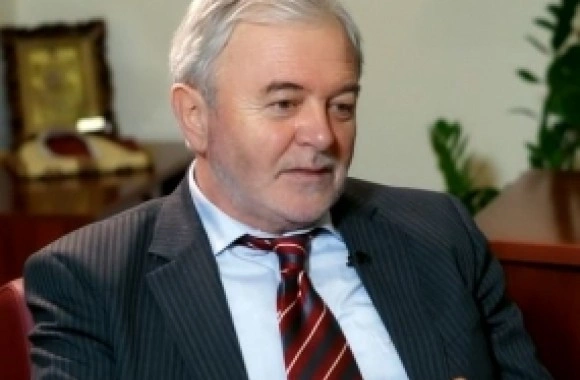
Vasyl Knyazevich: The plans for 2018 include the development of the "League" and strengthening of its role in society
The end of 2017 is coming to an end, which was a difficult year for Ukraine. It is possible to evaluate the political processes in the state in different ways, but the main task for everyone who takes care of health care is the daily routine work of caring for the sick and infirm.
What tasks does the "League for the Development of Palliative and Hospice Care" (hereinafter referred to as "the League") set for itself for the coming year 2018, why should representatives of the "League" be part of the supervisory boards of hospitals, how will decentralization affect the development of the "primary" - about this and Vasyl Knyazevich, the Chairman of the board of "League", told otherwise in an interview.
At the end of December, everyone traditionally sets goals for the coming year and considers further plans. What are the main steps you have identified for the "League for the Development of Palliative and Hospice Care?"
Next year will have several important tasks. First, we must strengthen our public organization. Now it has about 800 members, we are present in all regions, but I hope to increase the number of supporters to at least 1000 people. The main thing is that these are people who want and consciously undertake this difficult service and help the terminally ill. I would like volunteers to join as well, who still need to be trained and selected. For the next two years, we are starting to do this.
In addition to increasing the number, another of our tasks is to raise the status of our public organization. We must take responsibility not only for promoting our policies in the regions, but also for providing such assistance. It is about the creation of appropriate services, the provision of care services for palliative patients at home, assistance in the part of temporary provision with appropriate means - special beds and other specific equipment.
How do you plan to cooperate with hospitals in the regions?
Our goal is to join supervisory and guardian councils at hospitals, to create ethical committees at them. Now the philosophy will begin to change, because they will not be just budgetary institutions, but will become non-commercial, non-profit enterprises, and the rules of the game must be created here, there must be a system of counterbalances. Because earning is one thing, and quality and moral and ethical principles are something else. And the "League" can play a big role in the formation of such principles.
In 2018, a very important event in the field of palliative and hospice care is planned. Please tell us more about it.
Yes, next year is preparation for the 3rd National Congress on palliative care, which will be held in October. It would be ideal during the congress to sign such an agreement between the "League", medical associations, the relevant ministry, with economists, lawyers, where the entire system of palliative care in the state for a certain period will be outlined: how and where it is provided, where, whose area of responsibility. This document should unite everyone and develop palliative care in the same direction. It is also important to determine the place of the church in palliative care, to plan how the chaplaincy will develop.
Next year, the "primary" reform will start, where palliative care will be classified as state-guaranteed. How does cooperation with primary care physicians take place?
Family doctors work with the "League" very productively. But the system of primary care still needs to be built, it simply does not exist. The tragedy is that managers do not understand their resources - what they have, what they can count on, what the real population is. It should not be forgotten that we have not had a population census for a long time, plus the war and displaced persons, emigration is rampant. Does anyone control this?
When these questions are answered, then the state will understand how many family doctors it needs. We also have, among other things, staffing "distortions", because there is an oversaturation of doctors in the cities, but there are none at all in the villages. Today, first of all, it is necessary to think about preferences and additional payments for rural doctors.
Who should take care of it?
I think that now the search for doctors for rural areas should go to another level. I hope that decentralization will work and communities will understand their responsibility in this matter. They will find resources and really care about their doctors. It is true that centralized funding from the National Health Service somewhat complicates such development, but we need to work and move forward in the conditions we have.
Other News


