Dnipro can become a flagship in providing Ukrainians with palliative care
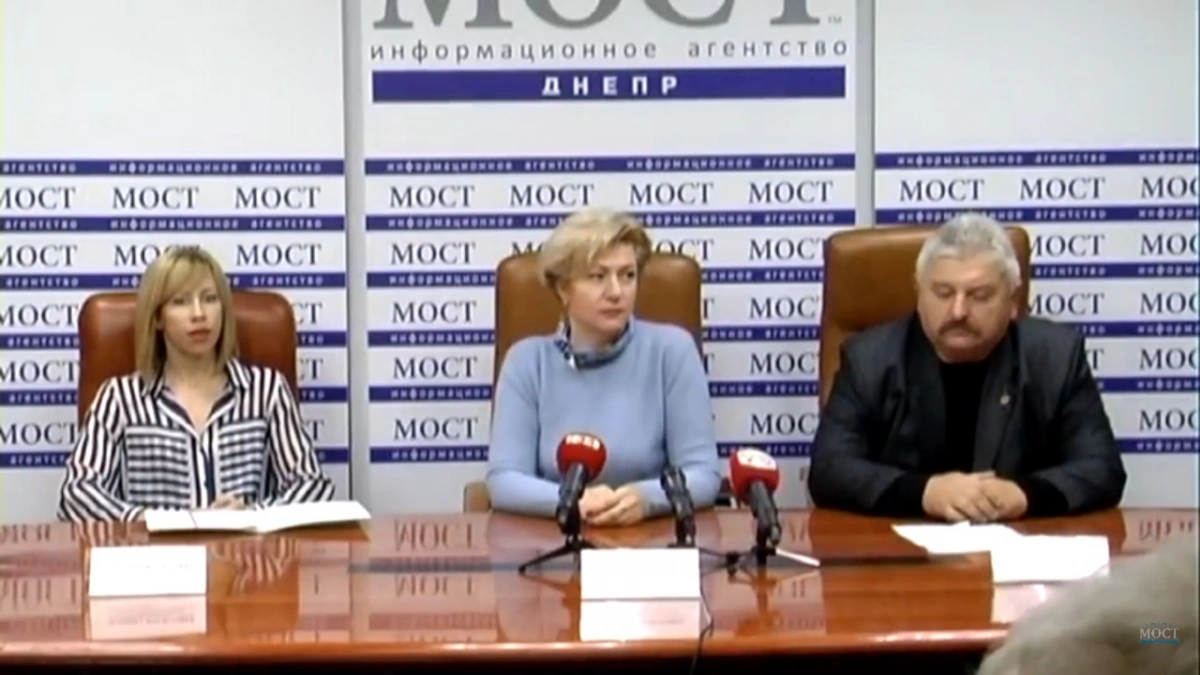
The creation of a modern, powerful regional center for palliative and hospice care, the constant attention of local authorities to solving the problems of palliative patients, and active work on training medical and social workers in the care of palliative patients indicate that Dnipro is gradually becoming a flagship in the topic of palliative care. This is how the head of the "Ukrainian League for the Development of Palliative and Hospice Care" Vasyl Knyazevich commented on the achievements of his colleagues in Dnipro.
About what has already been done and what is planned to be done was told during the press conference held in Dnipro as part of the month of the World Day of Hospice and Palliative Care.
As the head of the Dnipropetrovsk regional organization "Ukrainian League for the Development of Palliative and Hospice Care" Yury Krynychnyi noted, in Dnipropetrovsk they presented the city program of palliative care at the primary level, which deals with providing patients with bedsore mattresses, walkers, diapers, increasing funds for pain relief, etc. in Dnipro, an agreement was reached on cooperation with social services.
"The local government also voted for the reconstruction of the 15th city hospital under the Regional Center for palliative and hospice care according to the latest standards and with the most modern equipment. There will be a day hospital, an on-site team, a pain correction center, rehabilitation units, volunteer service, spiritual support," Krynychnyi said, adding that more than UAH 60 million has been allocated for the project. The center is planned to open in 2019, it is calculated for 46 beds and will perform medical and organizational-methodical functions.
At the same time, without waiting for the completion of construction, new palliative beds are being opened in the region. So, 10 beds have been opened in the city of Nikopol, 10 beds at the base of Dnipro City Hospital No. 2 and 12 beds at the base of the Territorial Medical Association. "Quantity is not something to be chased after," believes the head of the regional branch, "the most important thing is quality." It should be a ward for 1-2 people, a functional bed, an oxygen concentrator and sanitary conditions."
As everywhere in Ukraine, the issue of personnel training is very acute in the region. The Department of Palliative and Hospice Medicine of the P. L. Shupyk National Academy of Postgraduate Education held quite a few field meetings in Dnipro. More than 120 people, both chief doctors and primary and secondary doctors, have received appropriate training.
"Unfortunately, there are no thematic free courses for nurses. But the Dnipro authorities have already held negotiations with the leadership of the Shupyk National Medical School, and the city budget has already allocated an amount for field trips for family doctors and nurses of the Dnipropetrovsk region. We are talking about UAH 2-3 million. which will be spent both on training and on the creation of centers for the rental of palliative care products. After all, half of the patients would not end up in hospitals if they lay on a special anti-bedsore mattress, got on a walker in time and used diapers. However, legally today, this issue has not been resolved: until a person becomes disabled, he cannot receive it, but palliative patients do not live to become disabled," Krynychny emphasized.
The personnel problem of palliative care departments cannot be solved without decent remuneration. Officially, employees of palliative care departments and hospices receive only a 15% allowance for special working conditions, other allowances are set by the local authorities based on their capabilities. So, in Kyiv, a 100% municipal surcharge is paid, in Kropyvnytskyi, the surcharge is 45%. "Ukrainian League for the Development of Palliative and Hospice Care" believes that the issue of co-payments should be regulated more fairly.
Currently, the regional centers continue their work within the limits of the financial and human resources available today. "No matter what reforms take place, the most important thing for us today is to provide daily comprehensive assistance to the difficult category of patients," Yuriy Krynychnyi stressed.
Other News


